
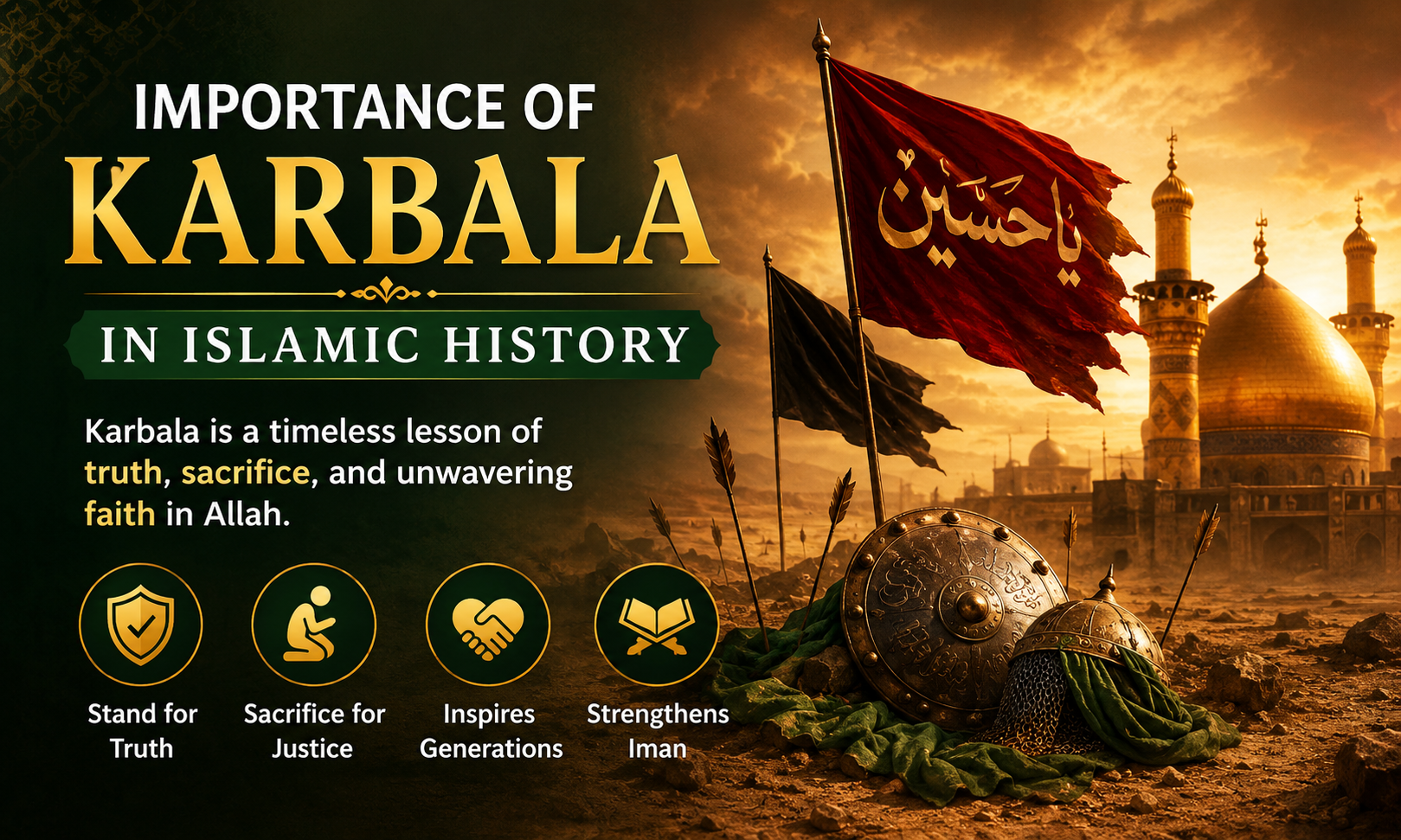
Importance of Karbala in Islamic History
The event of Karbala is one of the most significant moments in Islamic history. It is remembered not only as a historical battle but also as a powerful symbol of faith, justice, sacrifice, and unwavering commitment to truth. The stand taken by Imam Hussain (A.S.), the beloved grandson of Prophet Muhammad (PBUH & His Family), continues to inspire millions of Muslims around the world.
For Shia Muslims, Karbala represents the ultimate sacrifice made to preserve the true teachings of Islam. Rather than seeking political power, Imam Hussain (A.S.) stood against oppression and refused to pledge allegiance to a ruler whom he believed represented injustice and corruption. His sacrifice reminds believers that protecting truth and moral values is more important than personal safety or worldly gain.
Even after more than 1,300 years, the message of Karbala remains relevant. It teaches courage in difficult times, patience during trials, and steadfastness in defending justice.
What Was the Event of Karbala?
The Battle of Karbala took place on the 10th of Muharram, known as Ashura, in the year 61 AH (680 CE) on the plains of Karbala in present-day Iraq.
Following the death of Muawiyah ibn Abi Sufyan, his son Yazid assumed leadership of the Muslim state. Imam Hussain (A.S.) declined to give allegiance because he believed that leadership of the Muslim community should uphold justice, righteousness, and the values taught by the Prophet Muhammad (PBUH & His Family).
Imam Hussain (A.S.), accompanied by his family members and a small group of loyal companions, travelled toward Kufa after receiving numerous invitations from its people. However, the situation changed, and his caravan was intercepted before reaching the city.
The events culminated in the tragedy of Karbala, where Imam Hussain (A.S.) and most of his companions were martyred after enduring severe hardship, including deprivation of water.
Why Is Karbala Important in Islamic History?
The importance of Karbala extends far beyond a military confrontation. Its significance lies in the principles that Imam Hussain (A.S.) defended.
Standing Against Oppression
One of the greatest lessons of Karbala is that Muslims should never support injustice. Imam Hussain (A.S.) demonstrated that remaining silent in the face of oppression can have lasting consequences for society.
His stand became a timeless example that truth should never be sacrificed for worldly gain.
Preserving the True Message of Islam
Many Islamic scholars, particularly within the Shia tradition, view Imam Hussain’s sacrifice as essential in protecting the moral and spiritual teachings of Islam from political corruption.
Rather than allowing religious values to be overshadowed by unjust leadership, Imam Hussain (A.S.) chose sacrifice over compromise.
The Highest Example of Sacrifice
Imam Hussain (A.S.) knew the dangers ahead but remained committed to his mission.
He sacrificed:
- His life
- His family members
- His companions
- His comfort
- His worldly security
This extraordinary sacrifice continues to inspire Muslims to prioritize faith over personal interests.
Lessons We Learn from Karbala
The message of Karbala offers practical lessons that remain relevant today.
Courage
True courage is standing for what is right, even when facing overwhelming odds.
Patience
The family of Imam Hussain (A.S.) displayed remarkable patience during immense hardship, teaching believers to remain steadfast during life’s challenges.
Faith in Allah
Despite the severe trials they faced, Imam Hussain (A.S.) and his companions maintained complete trust in Allah.
Justice
Karbala reminds Muslims that justice should always take precedence over personal benefit.
Honesty and Integrity
The event encourages believers to uphold honesty, sincerity, and moral responsibility in every aspect of life.
The Role of Lady Zainab (A.S.)
The message of Karbala did not end on the battlefield.
After the tragedy, Lady Zainab (A.S.) courageously spoke out against injustice and ensured that the events of Karbala were remembered by future generations.
Her eloquence, patience, and unwavering faith played a crucial role in preserving the legacy of Imam Hussain (A.S.).
Karbala and the Holy Quran
The Holy Quran teaches believers to stand firmly for justice and righteousness. For example, Surah An-Nisa (4:135) emphasizes standing firmly for justice.
- Justice
- Patience
- Truthfulness
- Trust in Allah
- Sacrifice for righteousness
The Quran repeatedly encourages believers to uphold justice and remain steadfast in faith, values that are embodied in the stand taken by Imam Hussain (A.S.).
Why Muslims Continue to Remember Karbala
Millions of Muslims around the world commemorate Ashura each year because Karbala represents enduring values rather than merely a historical event.
Its remembrance serves as a reminder to:
- Defend truth
- Reject injustice
- Strengthen faith
- Practice patience
- Follow the teachings of Prophet Muhammad (PBUH & His Family)
For many Shia Muslims, gatherings during Muharram also provide opportunities to learn about Islamic history, reflect on moral values, and renew commitment to the teachings of the Ahlulbayt (A.S.).
Learning About Karbala Through Authentic Islamic Education
Understanding Karbala requires more than knowing dates and events. It involves studying the historical context, the teachings of the Quran, and the guidance of the Ahlulbayt (A.S.).
At Al Mehdi Quran Center, we strive to help students deepen their understanding of Islam through structured online courses taught by qualified Shia teachers.
Students can further explore Islamic teachings through:
- Shia Quran Tafseer Course Online
- Nahjul Balagha Course Online
- Fiqh-e-Jafria Course Online
- Online Shia Quran Classes
- Shia Quran Classes for Kids
- Readers who wish to study the historical events of Karbala in greater detail can explore authentic resources available at Al-Islam.org.
Conclusion
The importance of Karbala in Islamic history lies not only in the events that took place on the plains of Karbala but also in the timeless principles that emerged from them. Imam Hussain (A.S.) demonstrated that faith, justice, and integrity are worth defending even under the most difficult circumstances.
His sacrifice continues to inspire Muslims to uphold truth, resist oppression, and remain devoted to Allah. By studying Karbala and reflecting on its lessons, believers can strengthen their understanding of Islam and apply its values in their daily lives.
(FAQ)
Why is Karbala important in Islamic history?
Karbala is important because it symbolizes the stand of Imam Hussain (A.S.) against oppression and his commitment to preserving the true values of Islam through sacrifice, courage, and unwavering faith.
What happened at Karbala?
The Battle of Karbala took place on the 10th of Muharram in 680 CE, where Imam Hussain (A.S.), his family, and companions faced the forces of Yazid. Imam Hussain (A.S.) and many of his companions were martyred after enduring severe hardship.
What lessons does Karbala teach Muslims?
Karbala teaches courage, patience, justice, faith in Allah, honesty, and the importance of standing for truth even in difficult circumstances.
Why do Shia Muslims commemorate Ashura?
Shia Muslims commemorate Ashura to remember the sacrifice of Imam Hussain (A.S.), honor the martyrs of Karbala, reflect on their teachings, and renew their commitment to justice and righteousness.
Studying the Quran, Nahjul Balagha, Islamic history, and authentic teachings of the Ahlulbayt (A.S.) through qualified scholars and structured courses can help deepen your understanding.
Call-to-Action
Learn the Quran and Islamic Teachings with Qualified Shia Teachers
Deepen your understanding of the Holy Quran, the teachings of the Ahlulbayt (A.S.), Nahjul Balagha, Fiqh-e-Jafria, and authentic Islamic history through personalized one-on-one online classes at Al Mehdi Quran Center.
Book your FREE Trial Class today and begin your journey of authentic Islamic learning with experienced Shia Quran teachers.
References.
Nahjul Balagha, Al-Irshad by Shaykh al-Mufid, aur Bihar al-Anwar)