
Shia Islamic Beliefs (Aqaid): A Complete Guide for Muslim Families in the West
By Al Mehdi Quran Center
If you are raising children in the US, UK, Canada or Australia, you have probably heard these questions at the dinner table. “Why do we pray like this?” “Who are the Imams?” “My classmate says Muslims believe something different. Is that true?”
These are good questions, and they deserve calm, clear answers. Children who understand what they believe grow up confident, not confused. This guide explains Shia Islamic beliefs in simple language, so parents can understand them first and then pass them on with ease.
A quick note: when we say “Shia” here, we mainly mean Twelver (Ithna Ashari) Shia Islam, the largest Shia school of thought.
What does “Aqaid” mean?
Aqaid (beliefs) are the things we hold in the heart as true. Think of them as the foundation of a house. Prayer, fasting and good character are the walls and rooms, but without a firm foundation they do not stand for long.
In Shia Islam, the core beliefs are called Usul al-Din, the “roots of religion”. There are five.
The five roots of faith (Usul al-Din)

1. Tawhid: God is One
Everything begins here. Allah is one, with no partner, no equal and no beginning or end. He is not like His creation, and nothing is hidden from Him.
For a child, you can put it very simply: “Allah made everything, He sees everything, and He is always close to us.” That one sentence is a strong start.
2. Adl: God is Just
Shia Muslims believe that Allah is perfectly just. He never wrongs anyone, and He does not ask of a person more than they can bear. We are given the ability to choose between right and wrong, and because we can choose, we are responsible for our actions.
This belief shapes how families talk about mistakes. A child who understands divine justice learns that effort matters, that wrong can be corrected, and that no one carries another person’s burden.
3. Nubuwwah: Prophethood
Allah guided humanity through prophets, from Adam, Nuh and Ibrahim, to Musa and Isa (peace be upon them), ending with Prophet Muhammad (peace be upon him and his family), the last and final messenger. The Quran is his lasting miracle and the word of Allah, preserved for all time.
This is a belief Shia and Sunni Muslims share fully, and it is worth saying out loud to your children, because it reminds them how much they have in common with other Muslims.
4. Imamah: Leadership after the Prophet
This is the root where Shia Islam is most distinct. Shia Muslims believe that Allah did not leave the Muslim community without guidance after the Prophet. Just as prophets are chosen by Allah, so are the Imams, who protect the true meaning of the religion and guide people in faith and conduct.
Shia Muslims believe the first Imam was Imam Ali ibn Abi Talib (peace be upon him), whom the Prophet introduced to the community at Ghadir Khumm. The line continues through twelve Imams from the Prophet’s family. The twelfth, Imam al-Mahdi (may Allah hasten his return), is believed to be alive and hidden by Allah’s will, and will appear one day to fill the world with justice.
For families, Imamah is not just a topic of history. It is a relationship of love and loyalty to the Prophet’s family, and a source of examples to follow in daily life.
5. Ma’ad: The Day of Return
Every person will return to Allah and be accountable for what they did. Good will be rewarded and wrong will be answered for. This belief gives life meaning and gives children a reason to be honest even when no one is watching.
The practical side: Furu al-Din

Beliefs lead to action. Shia Islam also has ten practices known as Furu al-Din, the “branches of religion”:
- Prayer (Salah)
- Fasting (Sawm)
- Pilgrimage to Makkah (Hajj)
- Charity (Zakat)
- Khums, a one-fifth contribution on yearly savings
- Struggle in the way of Allah (Jihad), including the personal struggle against one’s own faults
- Encouraging good (Amr bil Ma’ruf)
- Forbidding wrong (Nahy an al-Munkar)
- Love for the Prophet’s family (Tawalla)
- Staying away from their enemies (Tabarra)
Most of these will look familiar to any Muslim. Khums, and the emphasis on Tawalla and Tabarra, are among the places where the Shia school stands out.
Raising children with these beliefs”
“Learn to read it correctly with Tajweed understand its meaning, and let it guide the home.”
Who are the Ahlulbayt and the twelve Imams?
Ahlulbayt means “the people of the house”, the Prophet’s family. Shia Muslims hold them in the highest respect. Many Muslims believe the Prophet said he was leaving behind two weighty things: the Quran and his Ahlulbayt, and that holding on to both keeps a person from going astray.
It helps to teach children the Imams by name and by character, not as a list to memorise but as stories. Imam Ali’s courage and justice. Lady Fatima’s dignity. Imam Hasan’s generosity. Imam Husayn’s sacrifice at Karbala, which taught the world to stand against oppression. Imam Sajjad’s prayers, collected in Sahifa Sajjadiya. When children know the people, the beliefs stop feeling abstract.
What Shia and Sunni Muslims share
It is easy to focus on differences and forget how much is common. Shia and Sunni Muslims share belief in one God, the same Prophet, the same Quran, the same Kaaba, and the same duties of prayer, fasting and Hajj.
In schools and workplaces in the West, your children will meet Muslims from many backgrounds. Teach them to say, “We agree on much more than we differ on,” and to explain their own beliefs politely instead of arguing.
Raising children with these beliefs in the West
Here are a few things that work for many families.
Start with stories, not rules. Young children love hearing about the Prophet and the Imams. Bedtime is a good time for it.
Link beliefs to daily life. When your child tells the truth even though it costs them something, say, “That is Adl and honesty in action.” Connection makes the lesson stick.
Do not dodge hard questions. Teenagers will ask why Shia Muslims believe what they do. A parent who says “let us find out together” earns more trust than one who says “just because.”
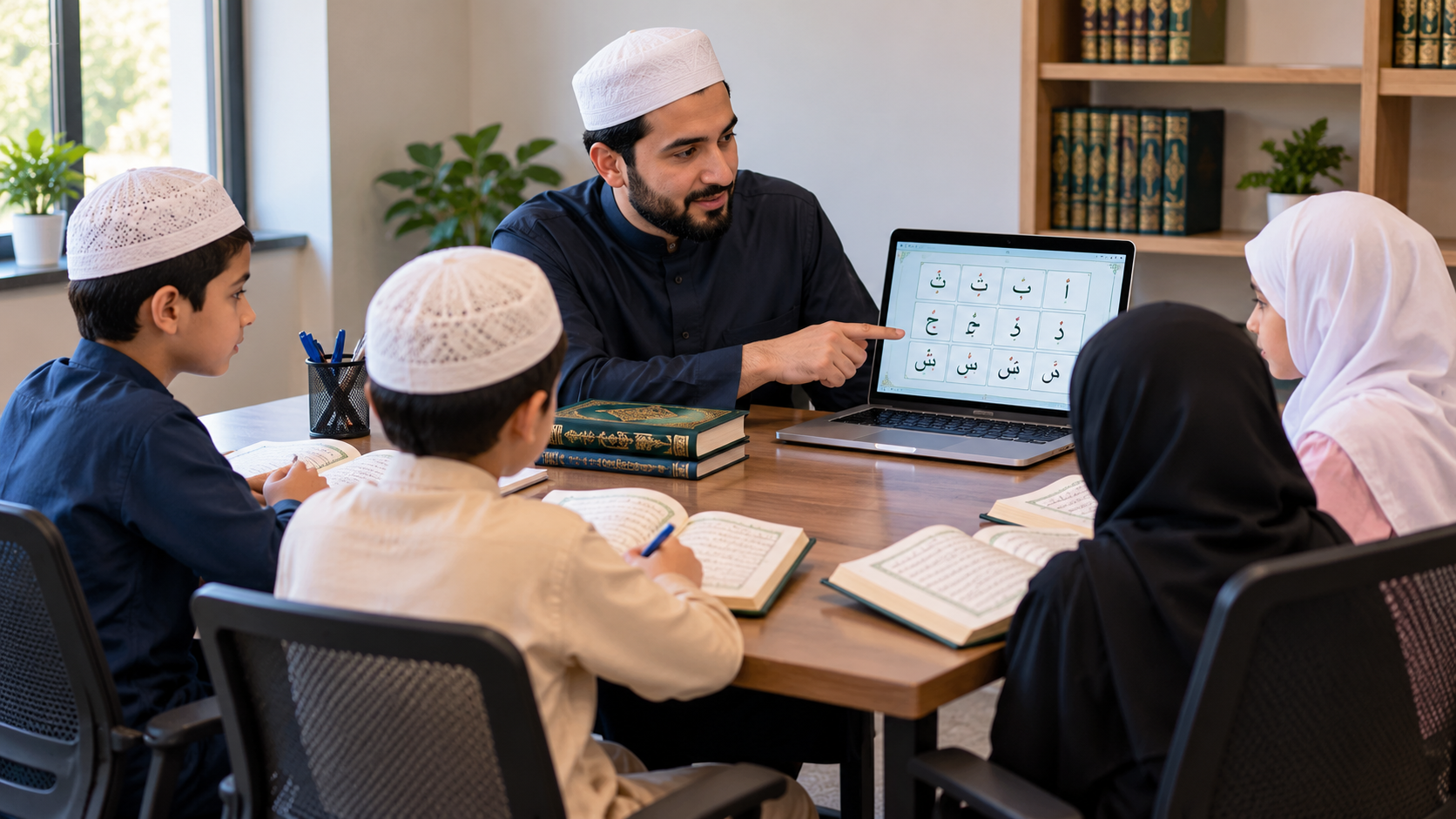
Use the Quran as the centre. Learn to read it correctly with Tajweed, understand its meaning, and let it guide the home. Beliefs rest on the Quran first.
Be part of a community. Attending majlis, Eid gatherings and local centre programmes shows children that they are part of something larger than their own household.
Common questions
Do Shia Muslims believe in the same Quran? Yes. There is one Quran, read by all Muslims.
Why do Shia Muslims pray differently? Some small details differ, such as how the hands are held, and the combining of prayers, but the five daily prayers, direction and purpose are the same.
Are Shia Muslims a separate religion? No. Shia Islam is a school of thought within Islam, with its own jurisprudence (Fiqh Jafari) and its own emphasis on the Ahlulbayt.
At what age should children start learning their beliefs? As early as they can talk. Start with Allah, the Prophet and the Ahlulbayt in simple words, and add depth as they grow.
Where to begin
You do not need to teach everything at once. Pick one root this month, talk about it at home, and read one short story about the Prophet or one of the Imams every week. Over time, understanding builds quietly.
If you would like your child to learn the Quran and these foundations with a teacher who shares your beliefs, our online classes are made for families like yours. Book a free trial class and see if it feels right for your home.